
Glamified launched as a UK haircare ecommerce store featuring major brands like K18, Olaplex, and Colour Wow. The site had products listed, but organic visibility was limited due to crawl/index issues, thin product content, and weak on-page signals.
This case study breaks down what we fixed during a 4-month SEO engagement and how the site achieved measurable growth in keywords and organic traffic (early-stage) — with momentum continuing afterward.
• +768% ranking keywords (28 → 243)
• +1,200% organic traffic (2 → 26)
• Entry into high-volume buyer-intent keywords (K18 / Olaplex / Colour Wow)

Let’s start from the baseline.
1/ Baseline: Where Glamified Started
Before SEO, the site had very limited organic traction. Google was not indexing most pages, and the domain had weak authority signals.
• Users: 920 | Sessions: 1.1k
• Bounce rate: 85.2%
• Organic channel traffic: 36 (vs direct 1032)
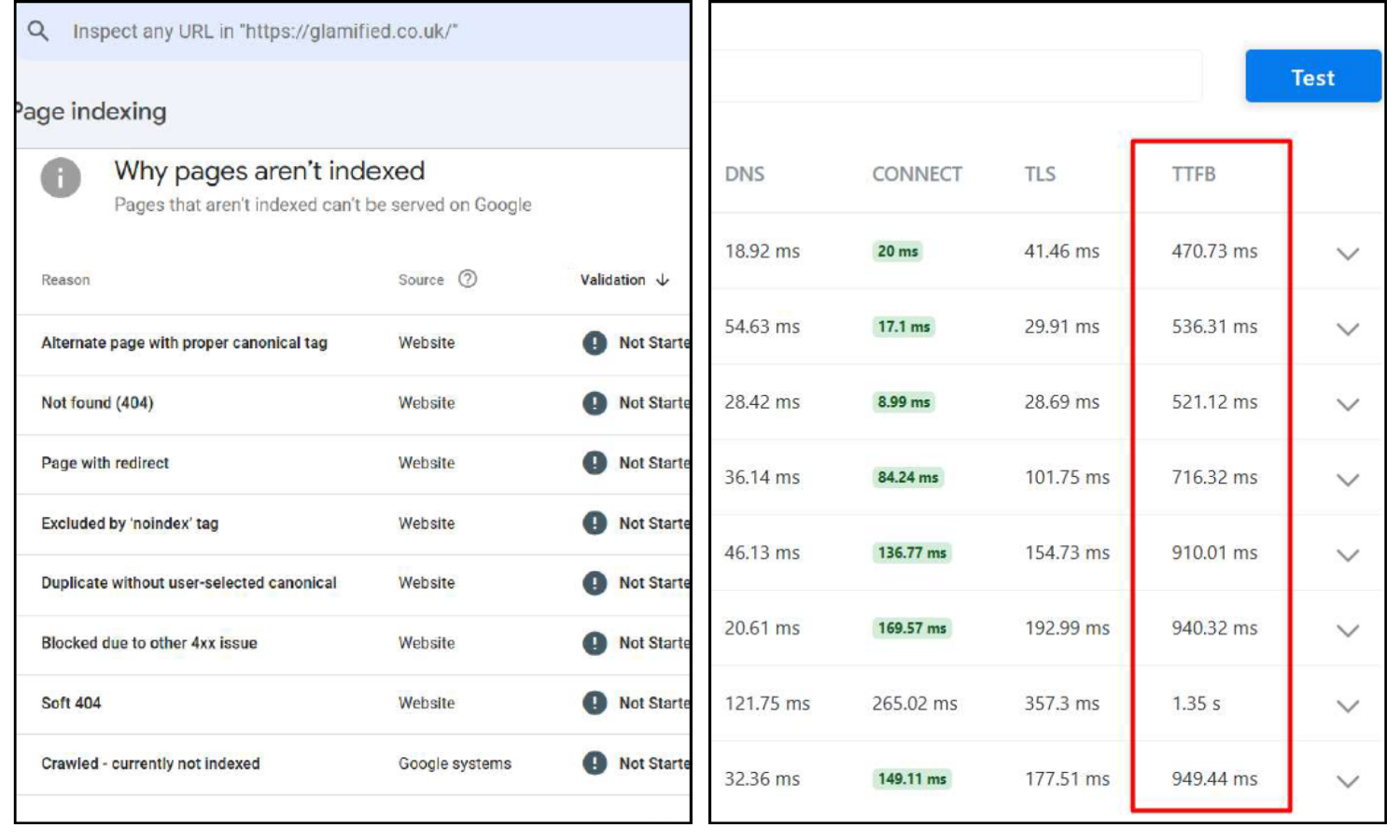
• Indexed pages: 294 | Not indexed: ~1.16k (~80% unindexed)
• Backlinks: 19 | Ref. domains: 16
The biggest bottleneck was indexation: only a small portion of the site was visible in Google, which capped growth no matter how good the products were.
2/ Root Issues: What Was Blocking Rankings
We identified four major blockers during the initial audit.
- Crawl waste & sitemap quality: non-SEO URLs (checkout/cart/wishlist/account) were included in the sitemap.
- Weak on-page SEO: generic or missing meta titles/descriptions, missing H1 structure, thin product content.
- Performance constraints: high TTFB (~800ms UK) and render-blocking resources affecting load speed.
- No topical authority engine: minimal supporting content + weak internal linking between blog and products.
3/ Strategy: Foundation-First Ecommerce SEO
Instead of chasing quick-win keywords, we focused on fixing crawl and relevance signals first — then scaling content and internal linking to expand the site’s topical footprint.
1) Fix crawl & indexation (robots + sitemap cleanup)
2) Repair architecture (pagination, blog hub, brand hub, breadcrumbs)
3) Optimize metadata at scale (home, categories, products)
4) Expand product page depth (benefits, usage, FAQs, semantic keywords)
5) Build topical authority via blogs + internal linking
4/ Implementation Timeline (Month-by-Month)
Here’s exactly what was delivered across the 4 months.
Month 1: Audit, benchmarking, analytics setup, baseline metrics, priority roadmap.
- Technical + on-page audit
- GA4 + GSC tracking setup
- Identified performance bottlenecks (TTFB, render-blocking)
- Documented sitemap issues and indexing constraints
Month 2: Technical SEO + architecture cleanup.
- Pagination fixed to clean
/page/N/format - Blog permalink structure updated to
/blog/%postname%/ - Brand hub created at
/brands/ - Breadcrumbs added across shop/category/product pages
- Robots + sitemap integrated, validated and cleaned
- Metadata optimized (Homepage + 11 categories + 80 product pages)
- UK localization fixed (hair “colour” vs “color” in metadata)
Month 3: Content depth + UX improvements.
- 7 SEO-optimized product pages delivered
- 4 supporting blogs published targeting long-tail haircare queries
- Heading hierarchy & readability improvements
- Blog publishing cleanup (visibility, featured images, structure)
Month 4: Topical expansion + commercial keyword entry.
- 7 more product pages optimized (total 14)
- 4 more blogs published (total 8)
- Internal linking strengthened between blogs and product/category pages
- Early rankings for high-volume buyer-intent terms achieved

5/ Results: Keywords, Traffic & High-Volume Entry
By month 4, the most important indicator was keyword expansion — the site began showing up for more long-tail and commercial queries.
• Organic keywords: 28 → 243 (+768%)
• Organic traffic: 2 → 26 (+1,200%)
• High-volume keyword entry across major haircare brands/products
High-volume buyer-intent keyword entry (early positions):
- k18 hair mask (22.2K volume) – Position ~48
- colour wow dream coat (12.1K) – Position ~70
- olaplex bonding oil (6.6K) – Position ~83
- hair spray (5.4K) – Position ~78
- clarifying shampoo (2.9K) – Position ~71

For a new ecommerce domain, ranking entry into competitive terms is an early trust signal. With continued authority growth, these terms typically move upward over time.
6/ Key Takeaways
This project demonstrates what wins in ecommerce SEO when a site is still early-stage.
• Crawl efficiency first (clean sitemap + robots)
• Better architecture signals (brand hub, blog hub, pagination, breadcrumbs)
• On-page optimization at scale (metadata + structure)
• Product page depth (semantic relevance + EEAT-style content)
• Blog support + internal linking for topical coverage